Lower Arm
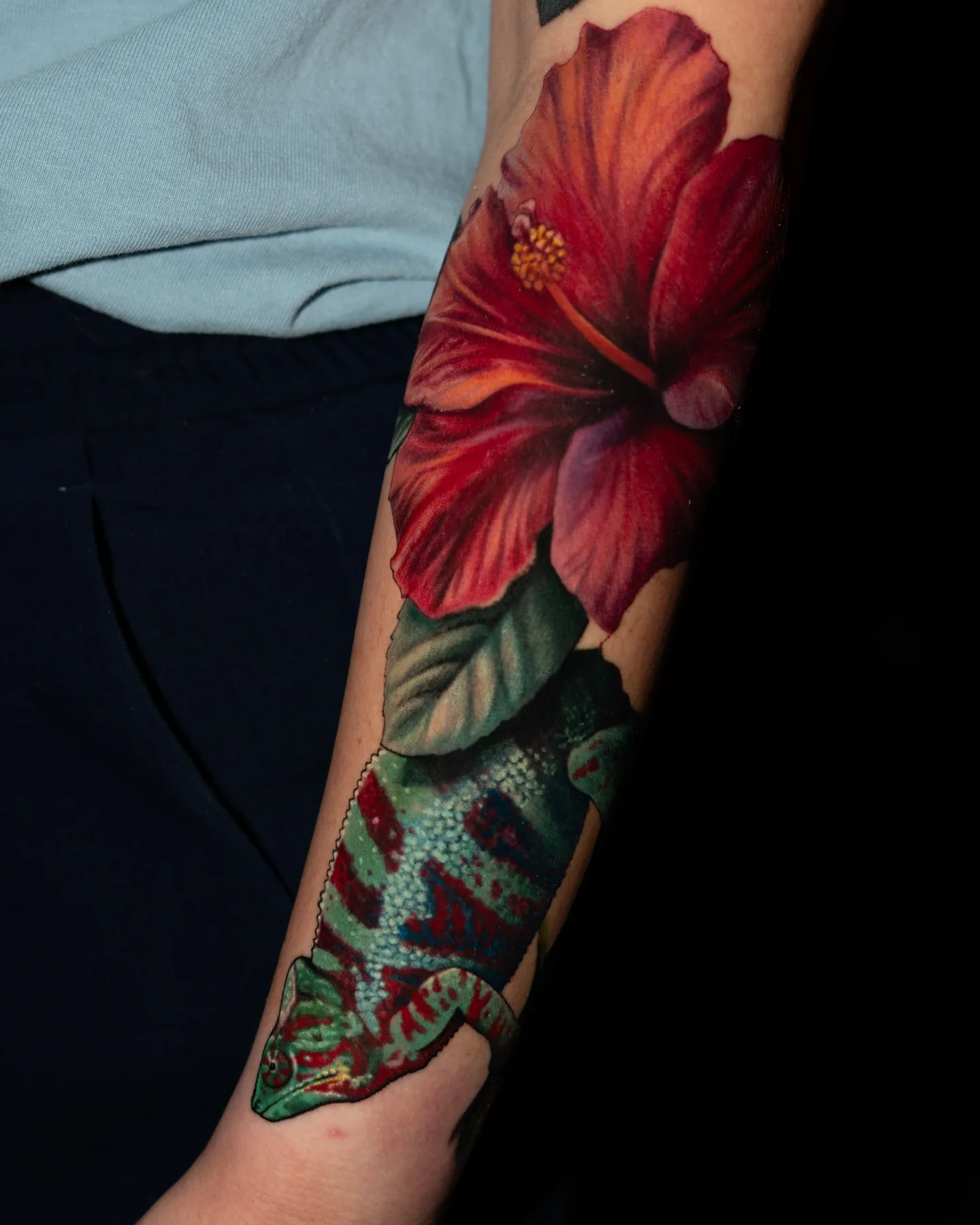
~2 DaysA rough estimate for covering the forearm in two main sections.
Everything you need to know about sleeve tattoos: sizes, styles, timing, and how the whole process works, from the first sketch to the final session.
I’ve watched hundreds of great drawings stop working the moment they hit skin — not because the art was bad, but because nobody planned what the sleeve actually needed to be.
A sleeve isn’t just a collection of images that happen to fit on an arm. The main subjects, background, transitions, and natural movement of the arm all need to work together.
Plan the sleeve around your arm, not your arm around the sleeve. One story beats a deck of separate ideas.
A large sleeve has to work around the arm, not just look good in one photograph. Video and multiple views help show how the design connects from one surface to another.
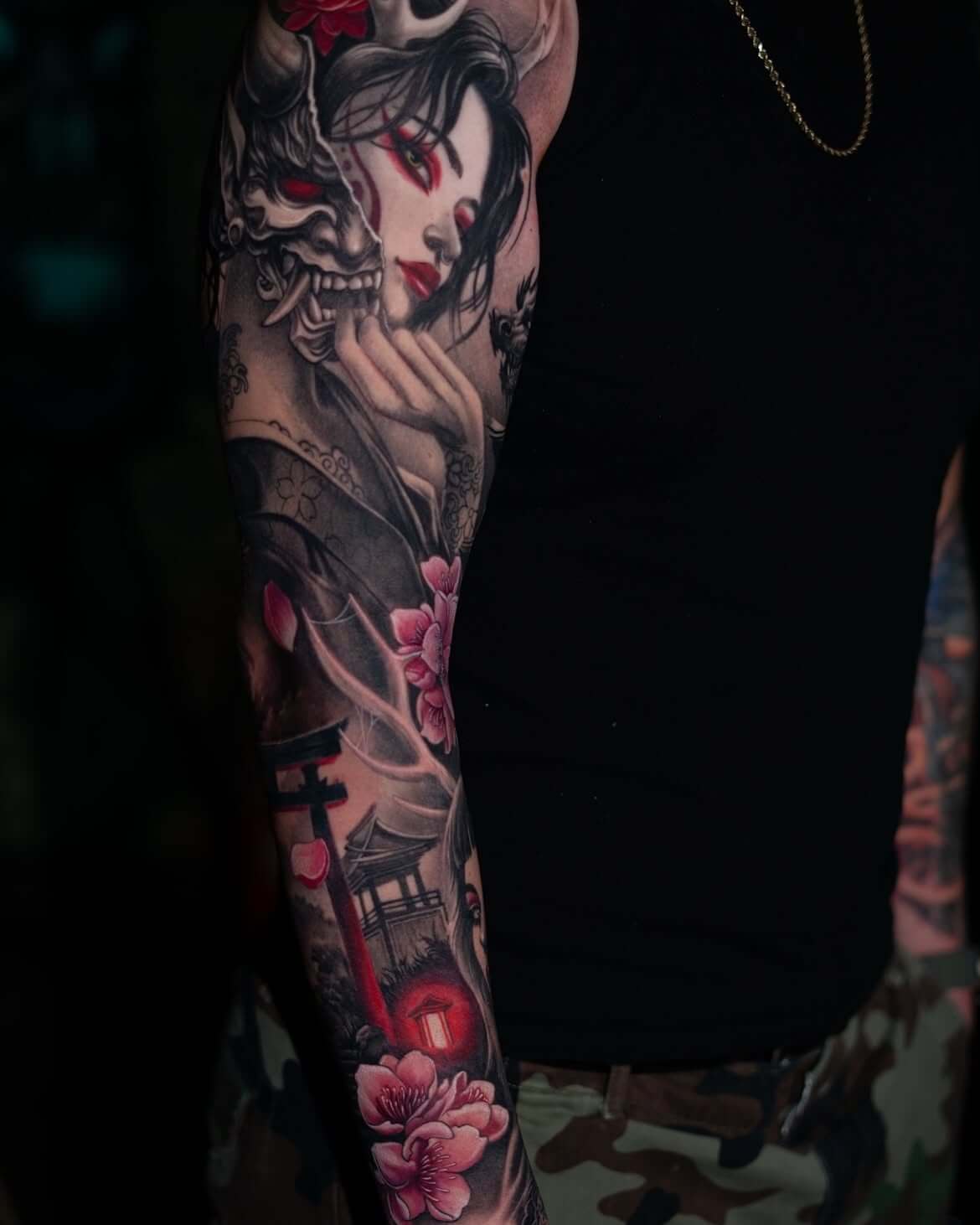
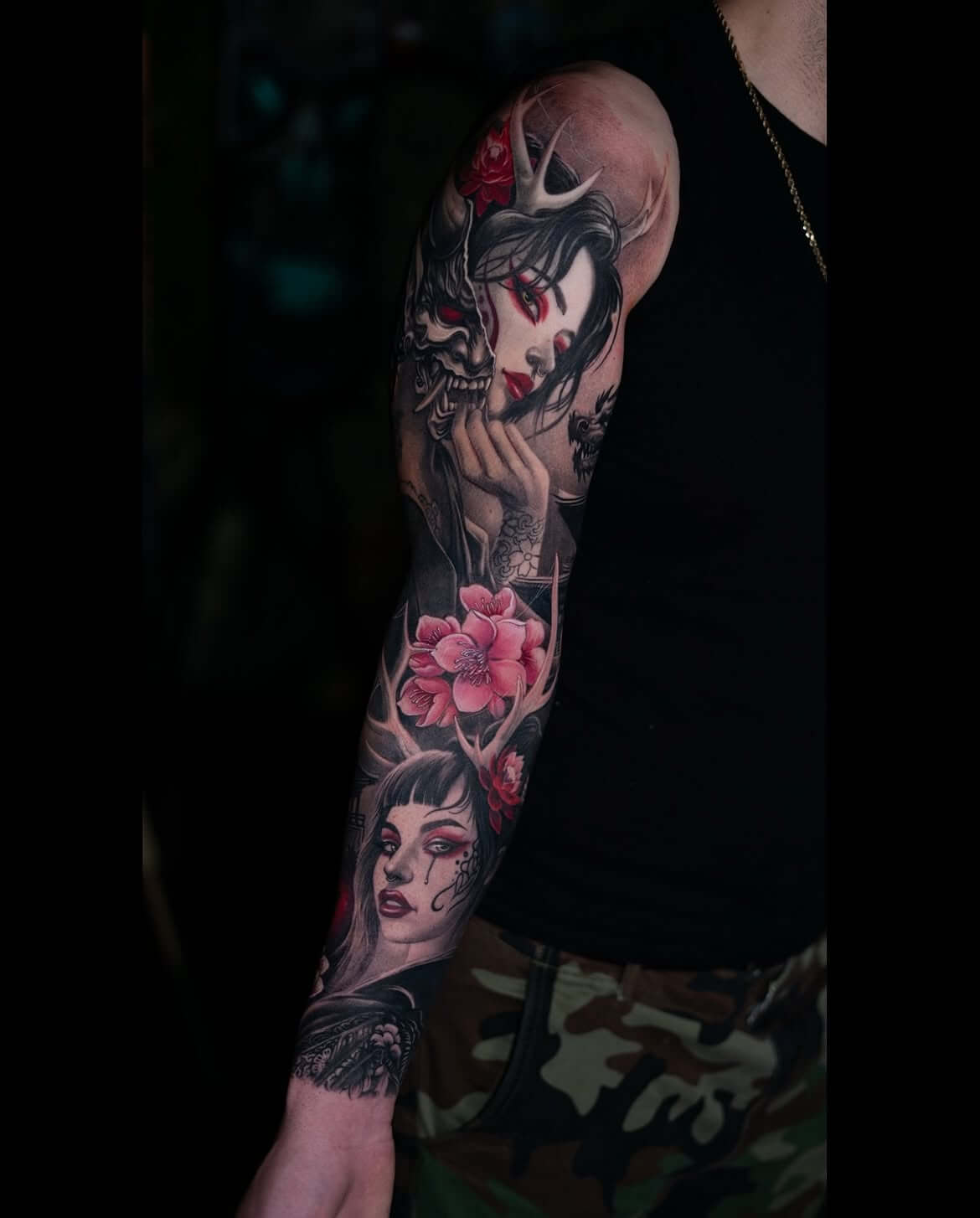
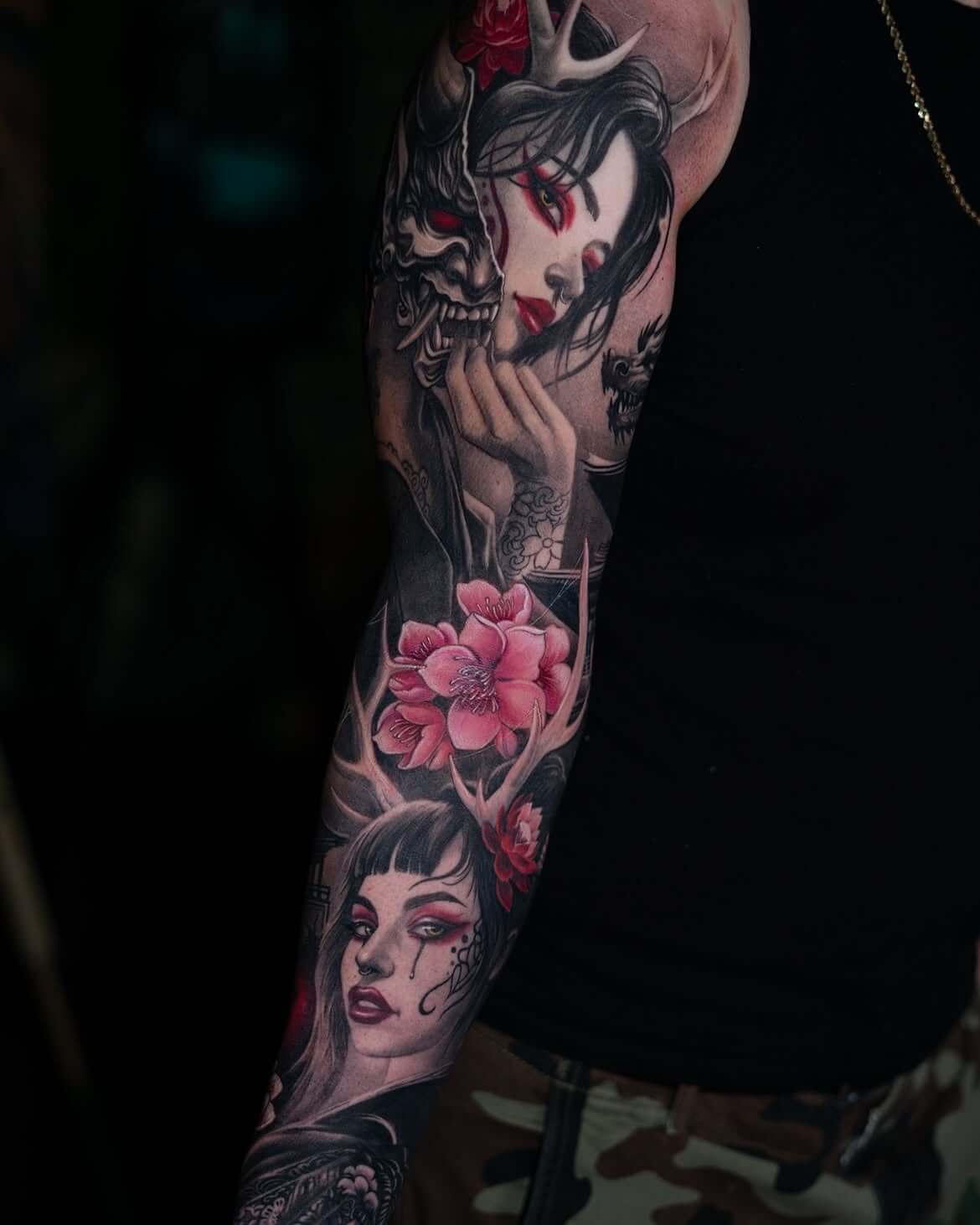
When clients ask me how many sessions a sleeve will take, I usually start by picturing a person of average build and adjust the estimate for their arm size and the detail required by the design.
In each session, I generally cover an area roughly the size of a single sheet of US Letter paper (8.5 × 11 inches), which is close to A4. That doesn’t mean I literally fill the whole rectangle with ink. It’s a practical way to estimate how much territory one visit can handle.
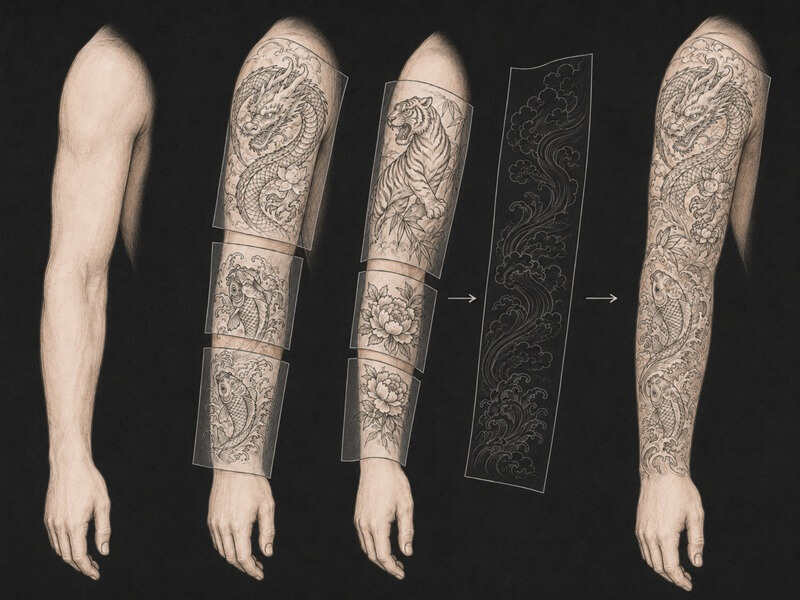
Before the session, I prepare a transfer and see how the drawing fits that part of the arm.
When you wrap a sheet around your forearm, about 15–20% on either side turns into the wraparound area. That’s often where I put secondary elements: background, textures, clouds, waves, and transitions. The most important details should remain visible from the primary viewing angles.
For an average arm, the lower forearm takes roughly two sessions. The outer upper arm adds another, and the inner upper arm another.
Then there’s the work that makes the sleeve feel complete: connecting backgrounds, transitions, and elements that unify the different sections.
There may also be a transition into the shoulder, shoulder blade, or upper back. The amount of work depends on the design.
A typical full sleeve on an average-sized arm takes approximately five to six full-day sessions, but that figure changes with the style, detail, anatomy, and scope of the project.
A rough estimate for covering the forearm in two main sections.
Outer and inner upper-arm compositions.
Background, connections, and adjustments to complete the sleeve.
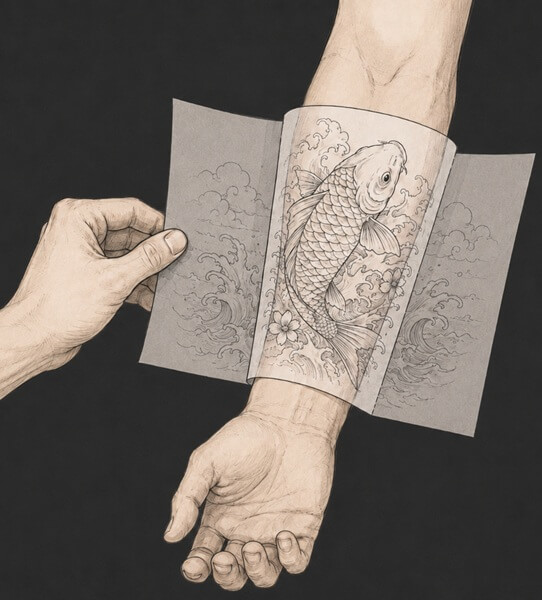
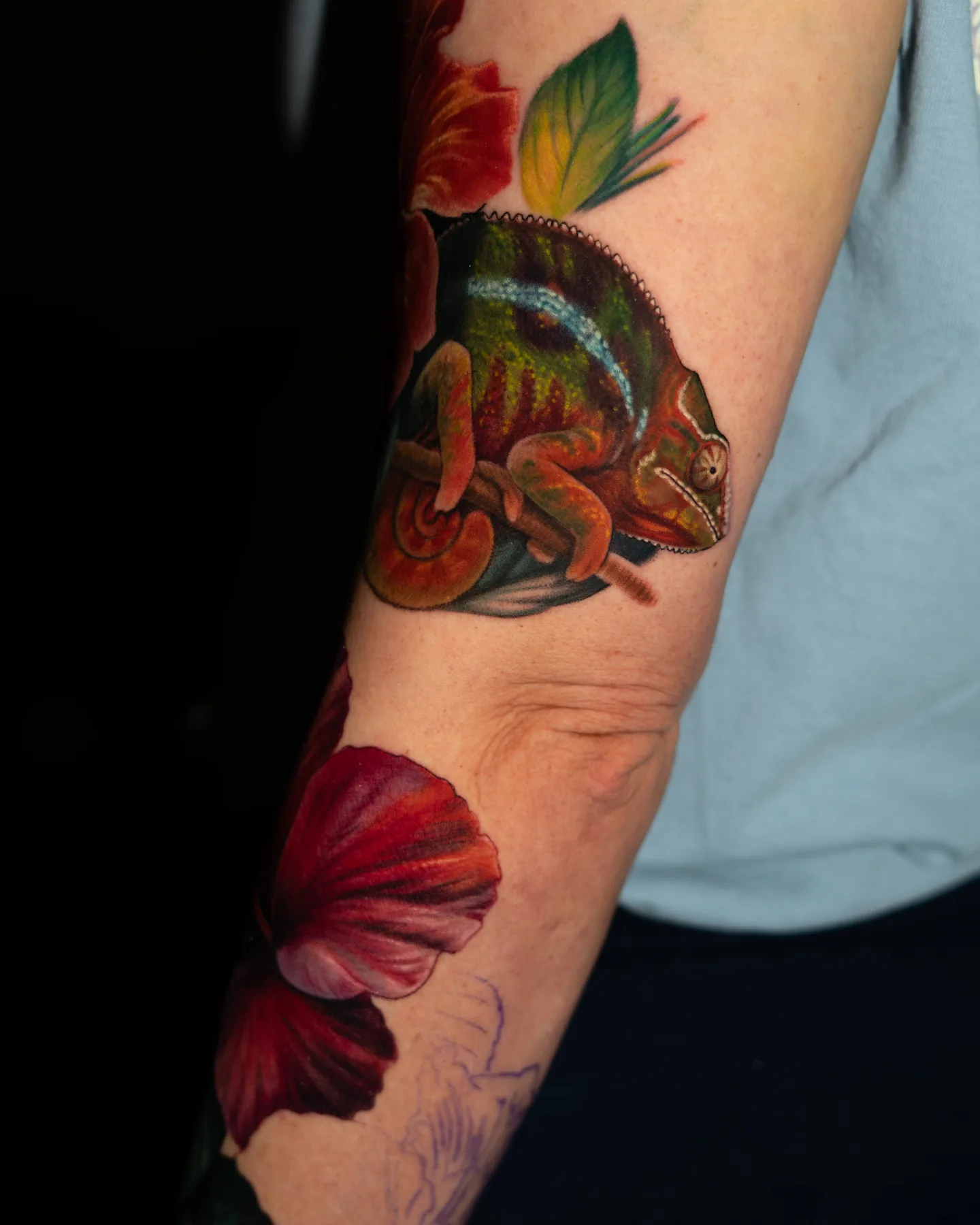
Hibiscus and Chameleon Sleeve / After Two SessionsWhat changes the estimate? A design with broad forms, such as large Japanese dragons and waves, can take less time than highly detailed realism. The difference may be around one full-day session in either direction, but I calculate the plan for each client individually.
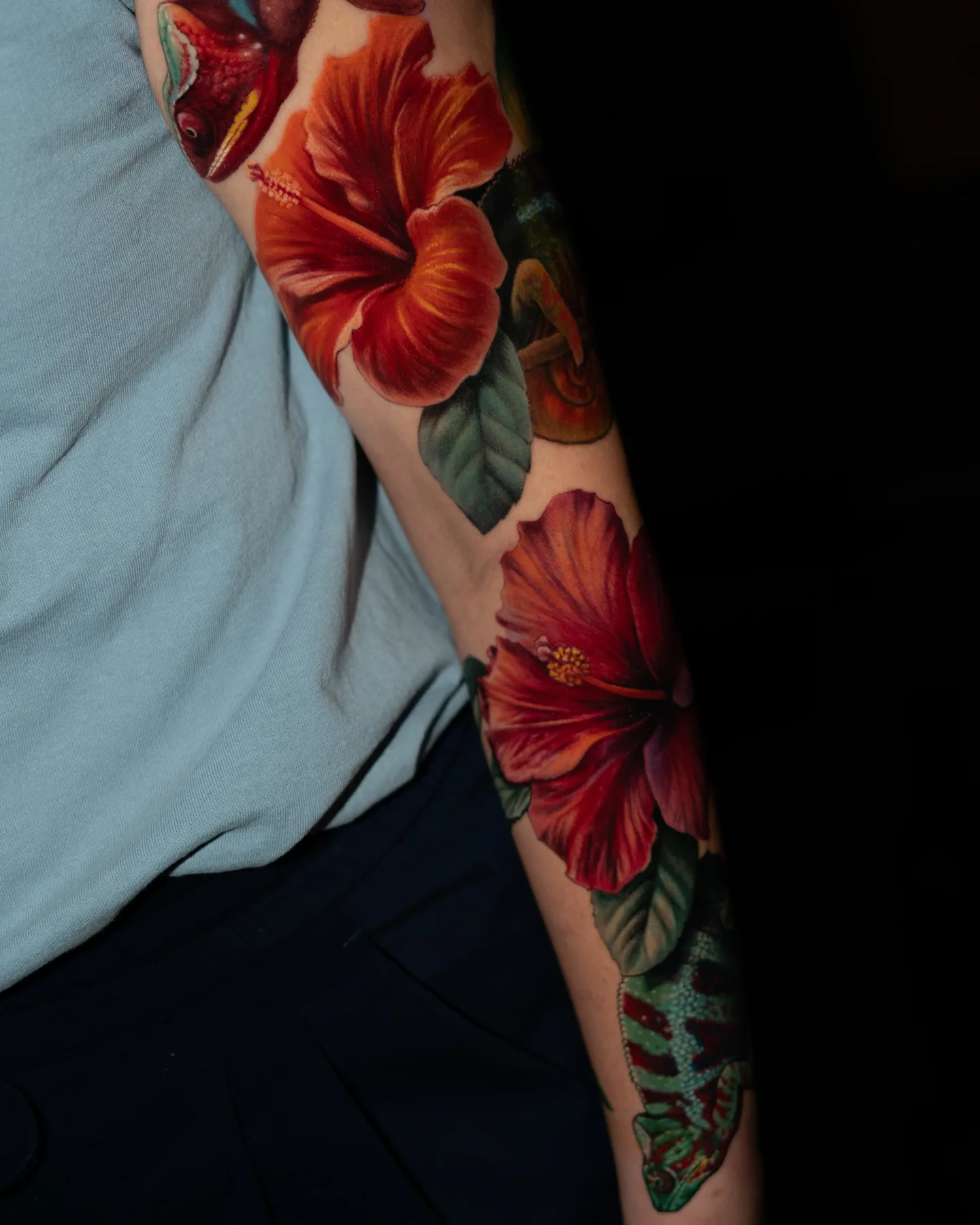
There’s no single style that defines a full sleeve. What matters is choosing an approach that supports the subjects you want and lets the composition work around your arm.
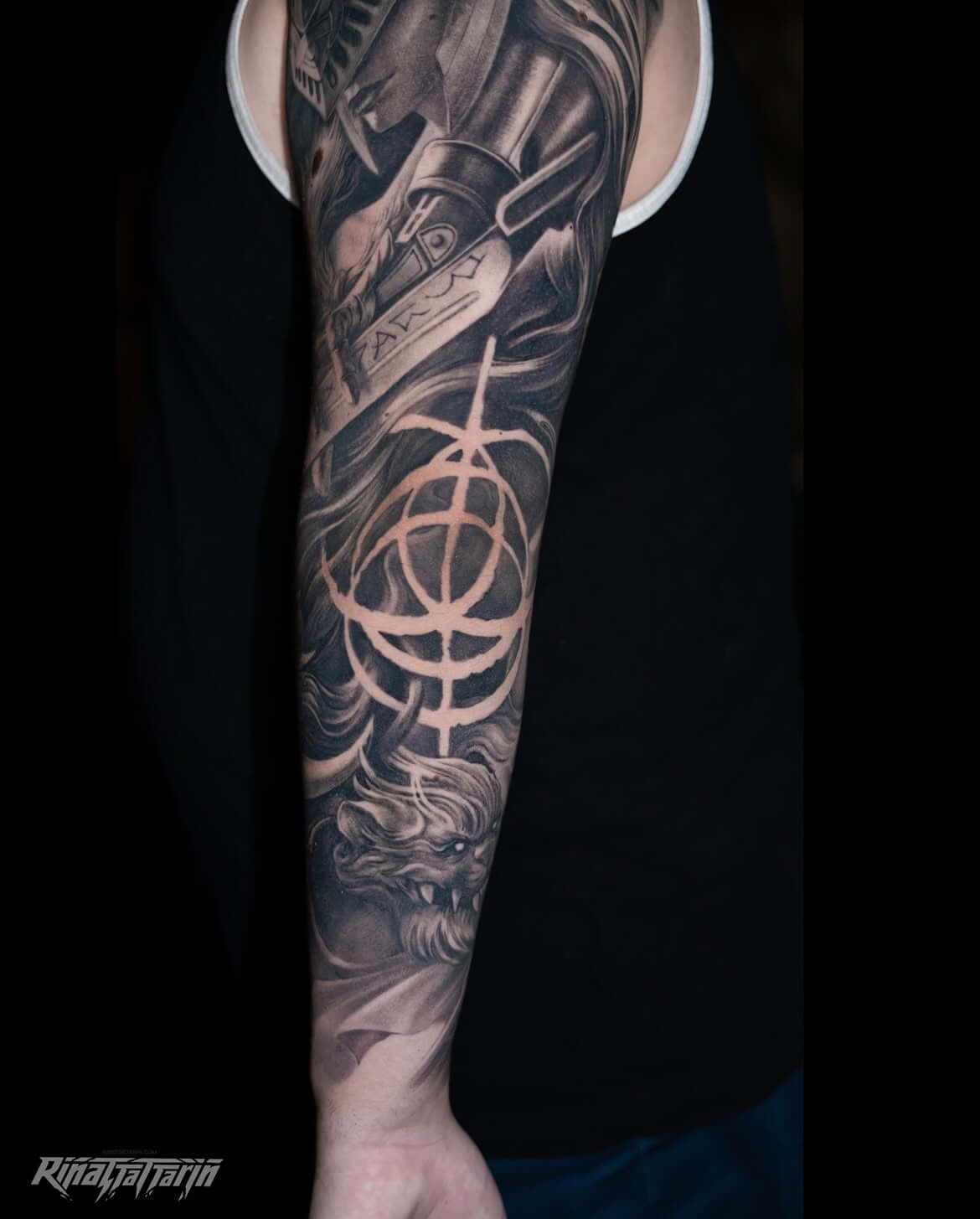
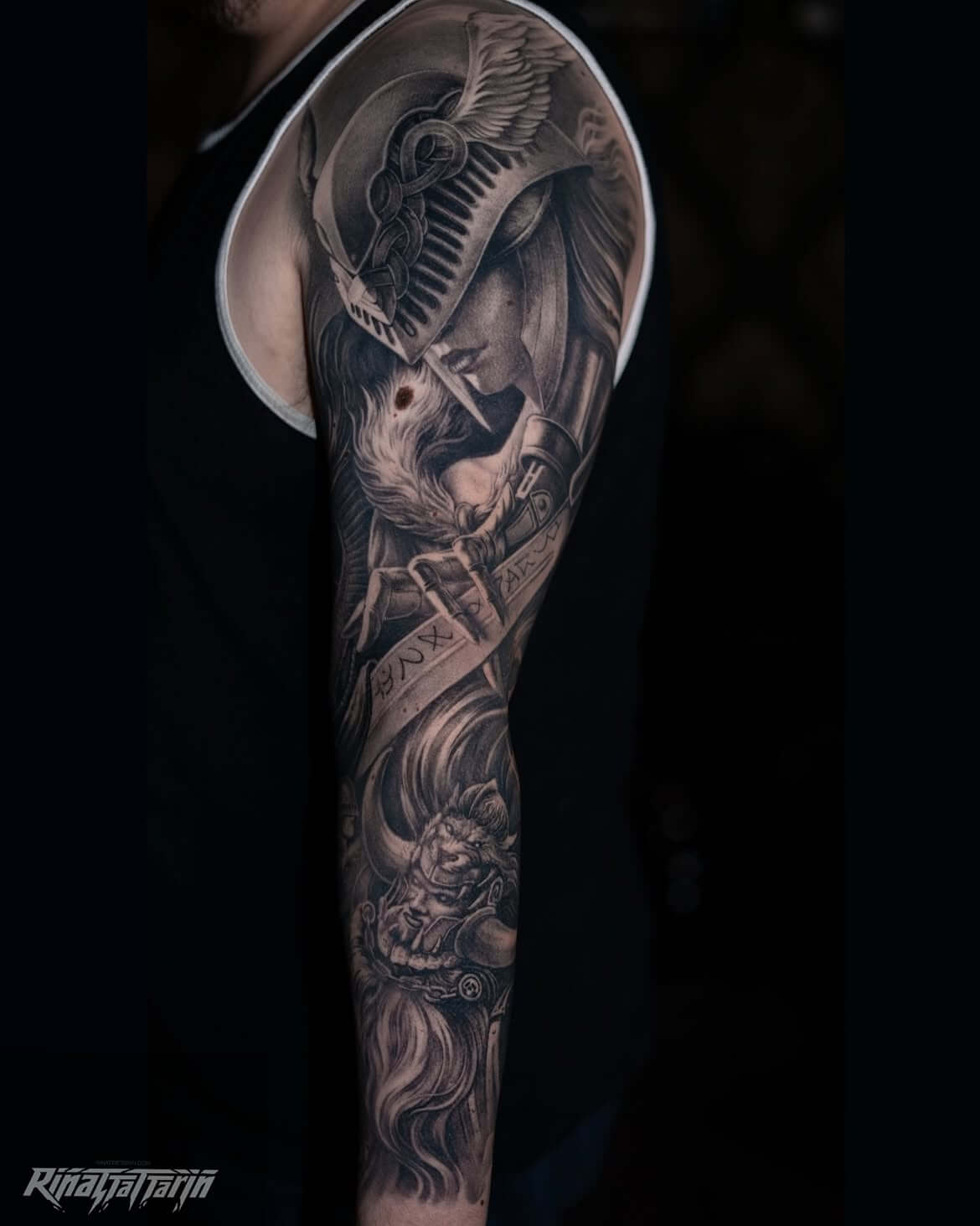
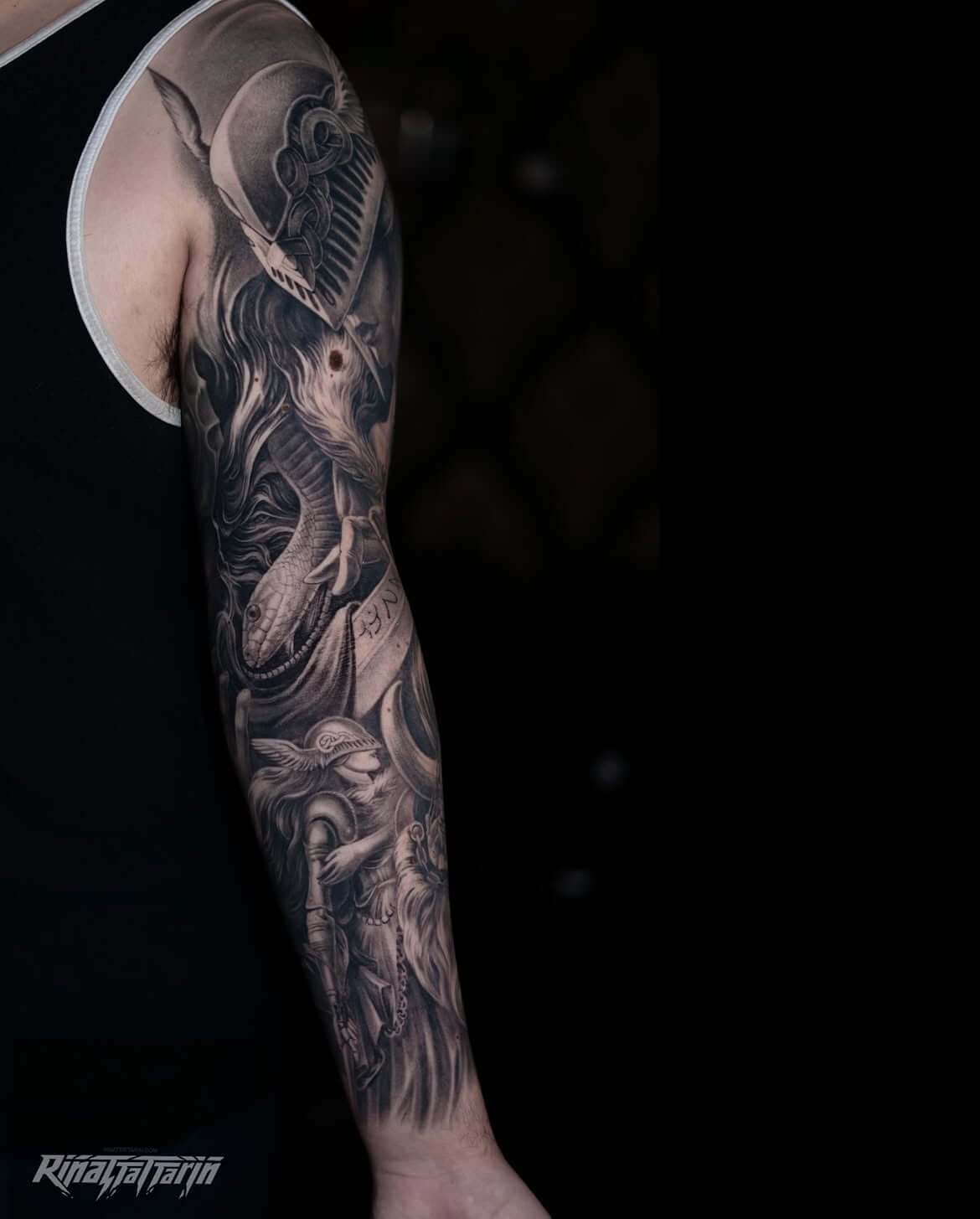
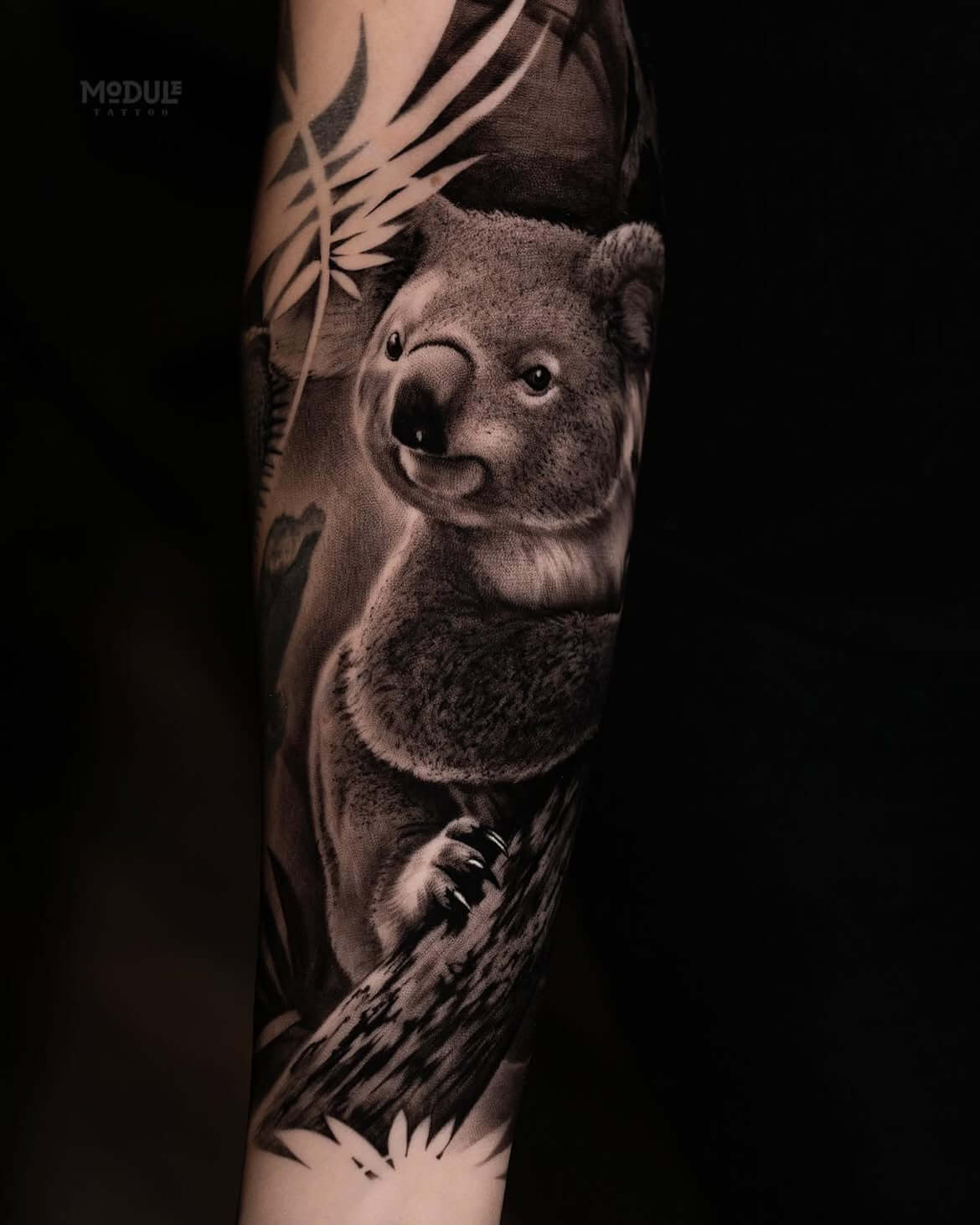
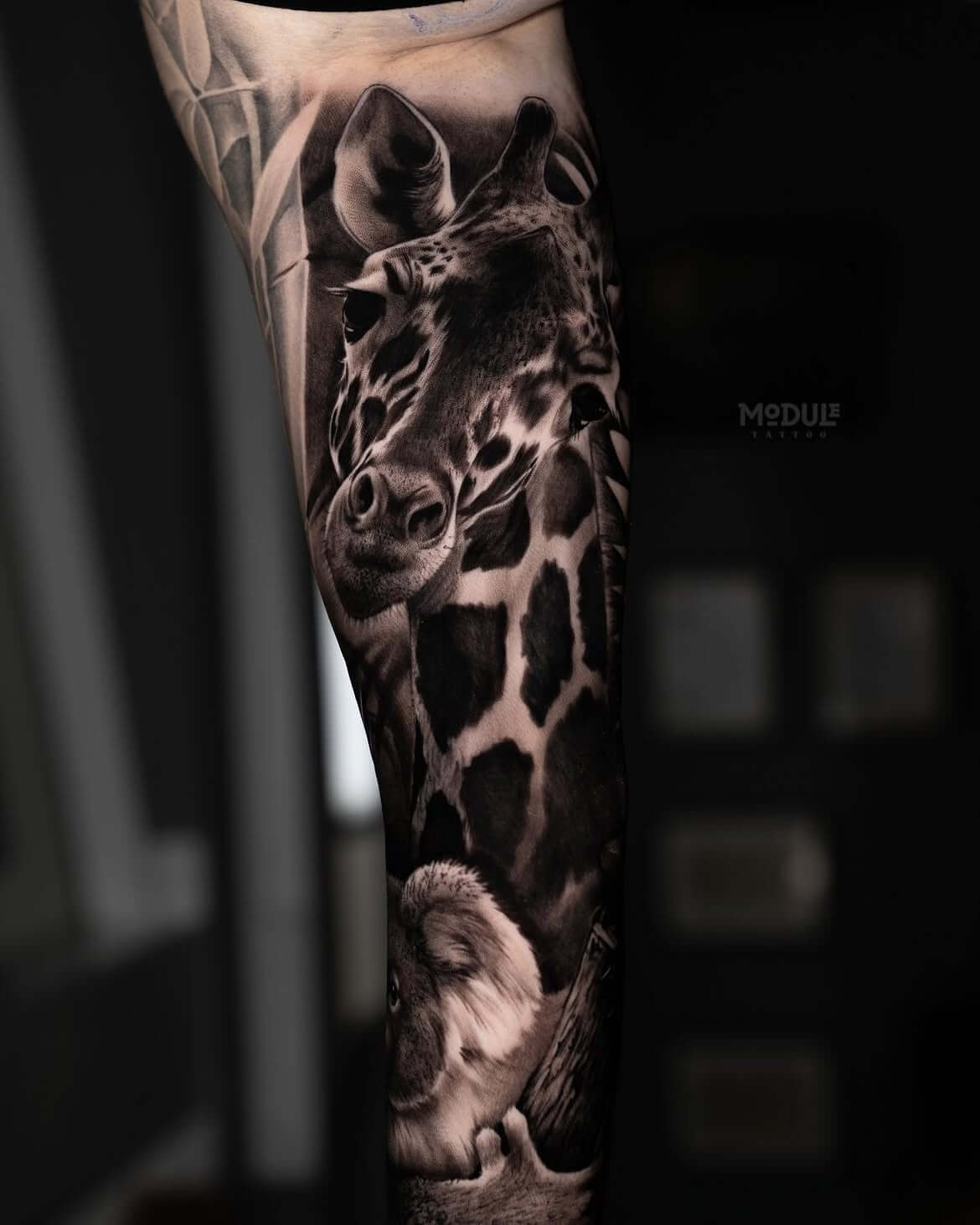
Black and grey realism has become one of the most requested approaches for large-scale projects. Without color, the composition can feel quieter and more cinematic, with contrast and shading carrying the visual structure.
I think about where the darkest areas belong, how lighter passages separate the main subjects, and how the composition connects from the shoulder to the wrist.
The result should be readable as a whole, not just as a collection of individual portraits or objects.
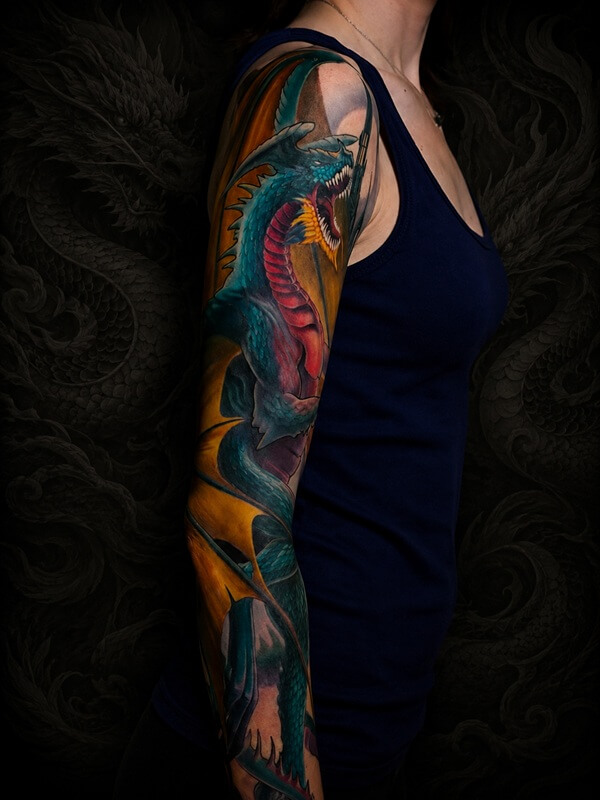
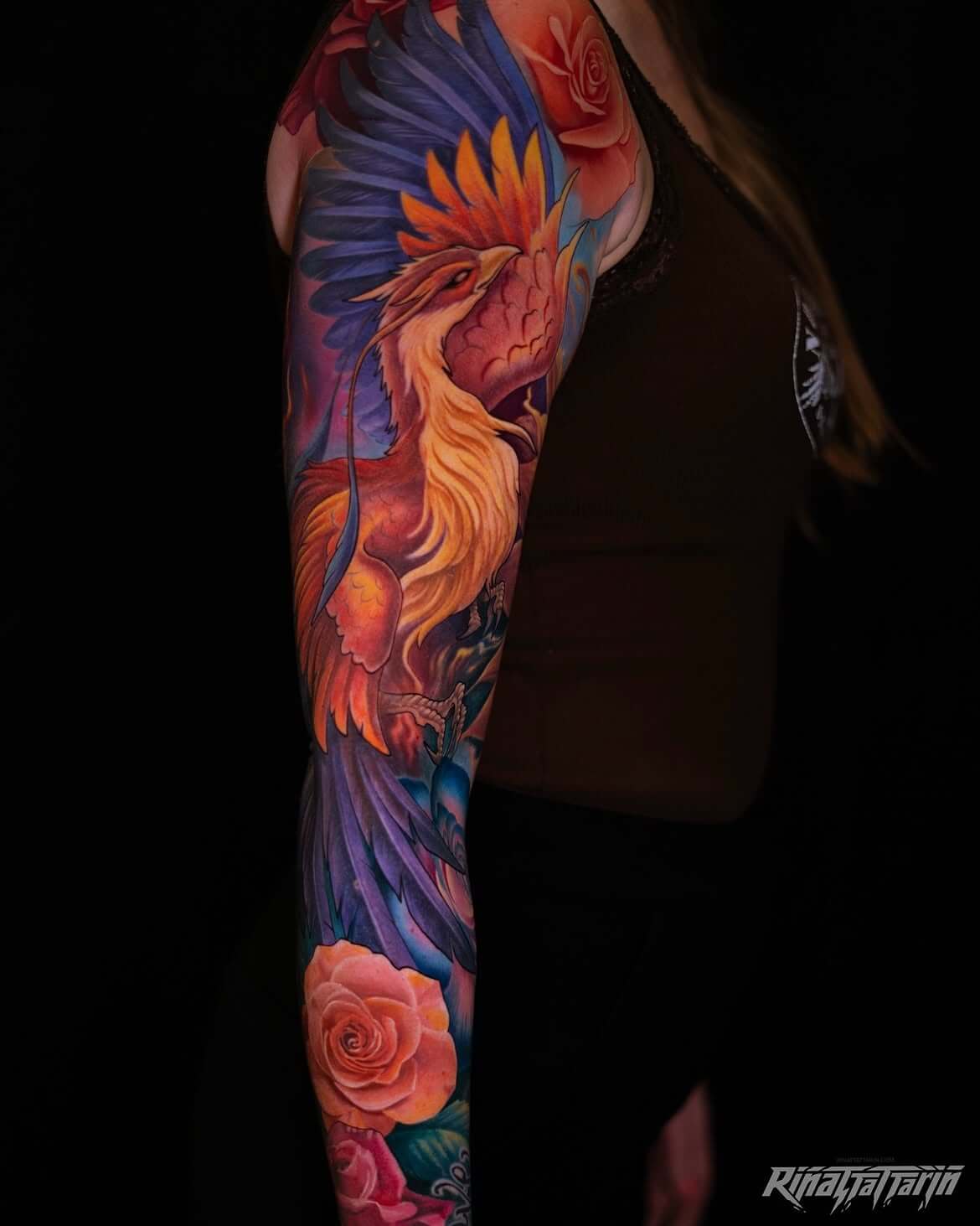
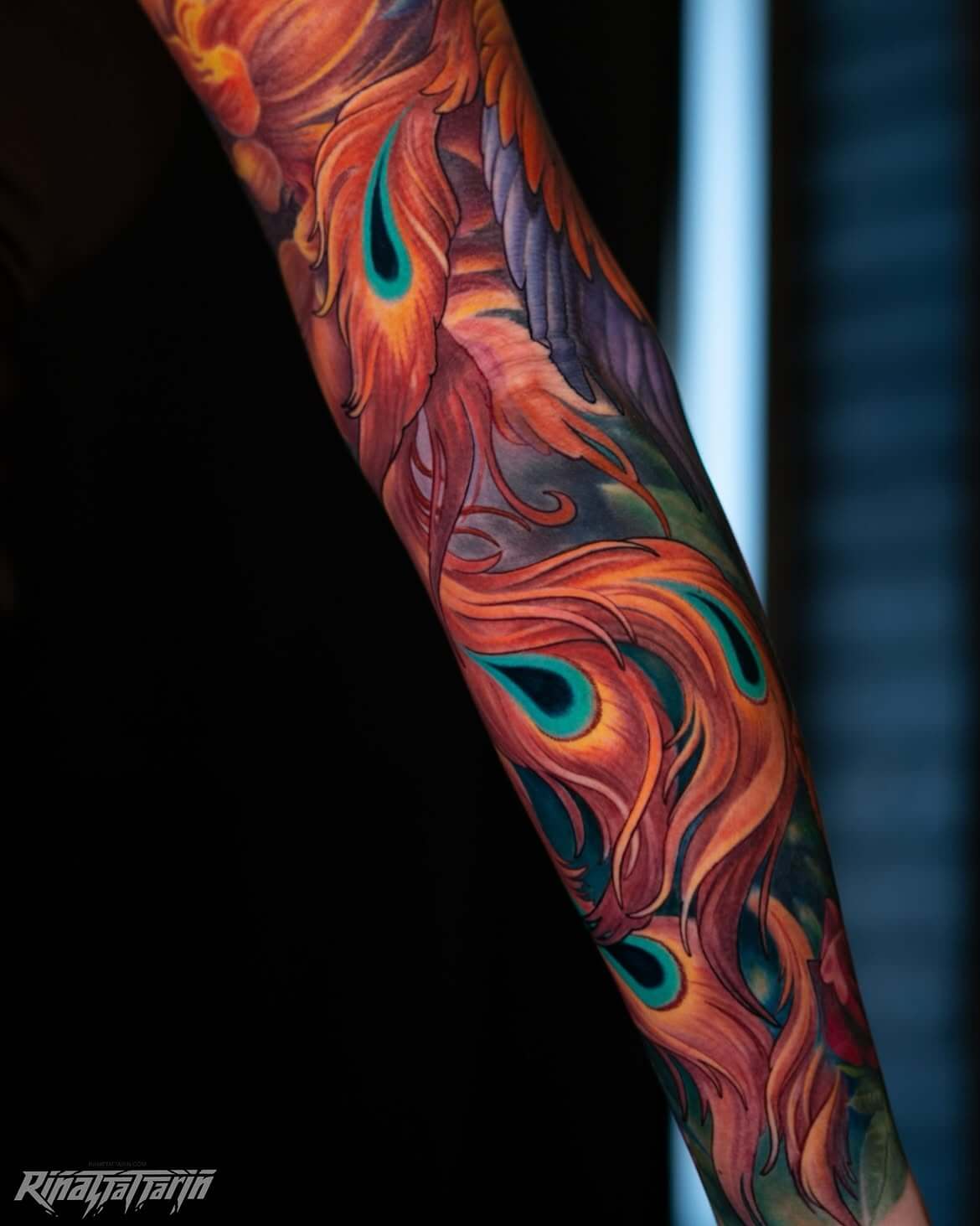
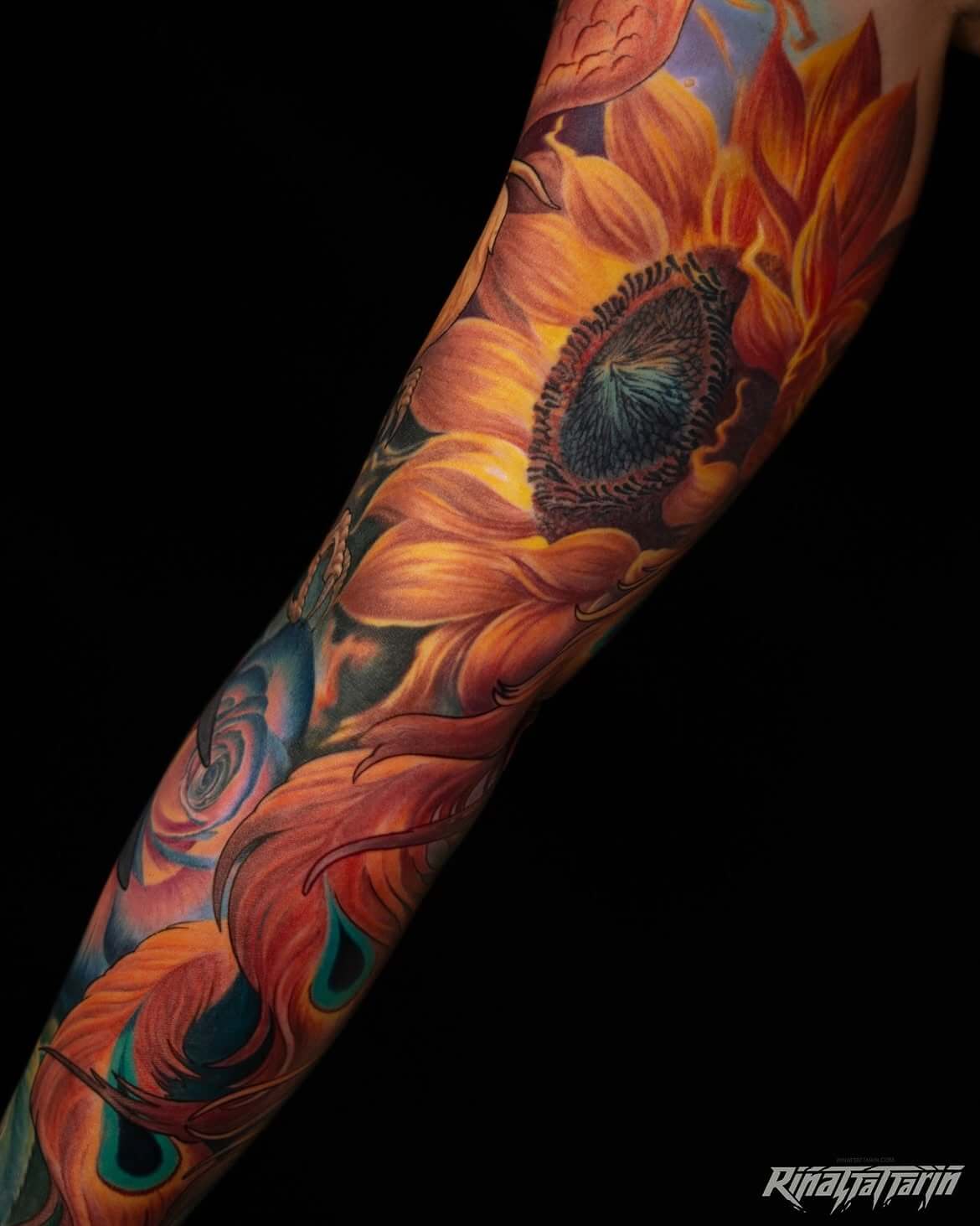
Color costs a little more planning than black and grey. Saturation, contrast, and the order in which different elements are developed all matter.
Detail-heavy color realism can require longer sessions than a design with simpler, bolder shapes.
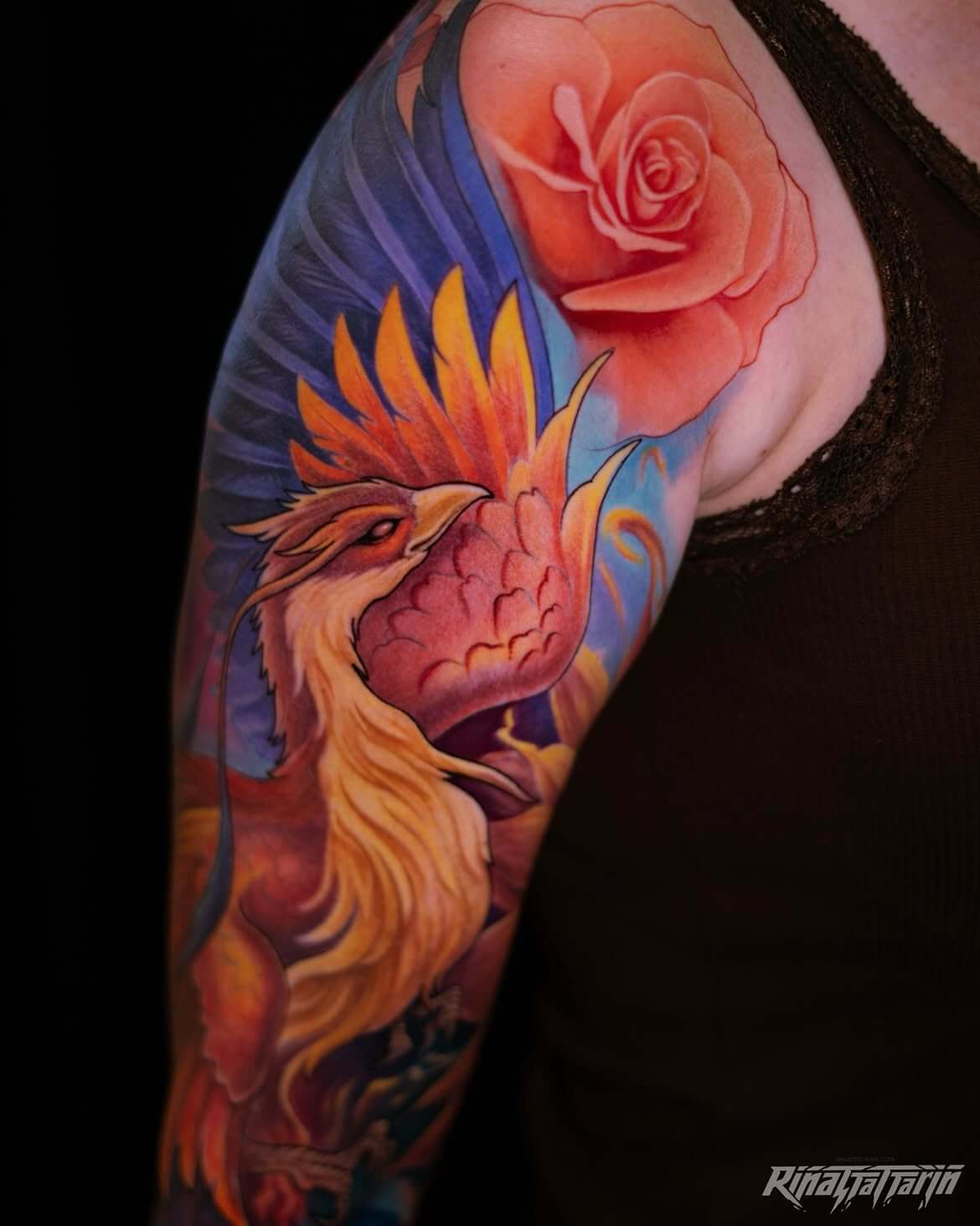
What I enjoy about color is the range of possibilities. A sleeve can be vivid and dramatic while still keeping the main subjects clearly separated from the background.
A portrait sleeve is where composition discipline matters especially much. Clients often want a meaningful lineup of family members, musicians, personal heroes, or characters that feels intentionally arranged.
The challenge is keeping every face recognizable while giving the entire sleeve a consistent flow. Each portrait needs enough room, and the transitions shouldn’t compete with the important facial details.
I plan the arrangement so the main faces are visible from useful viewing angles and the background helps connect them.
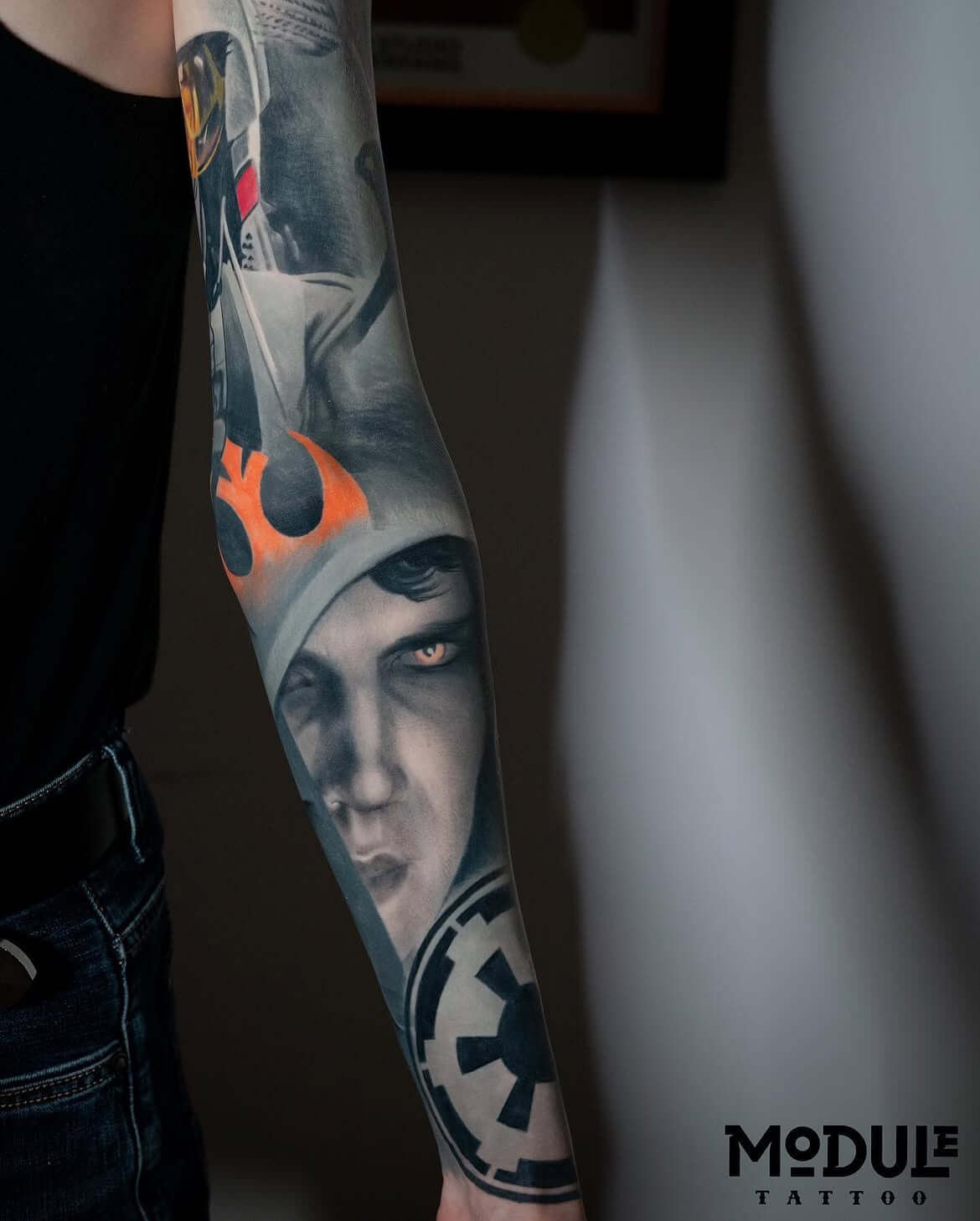
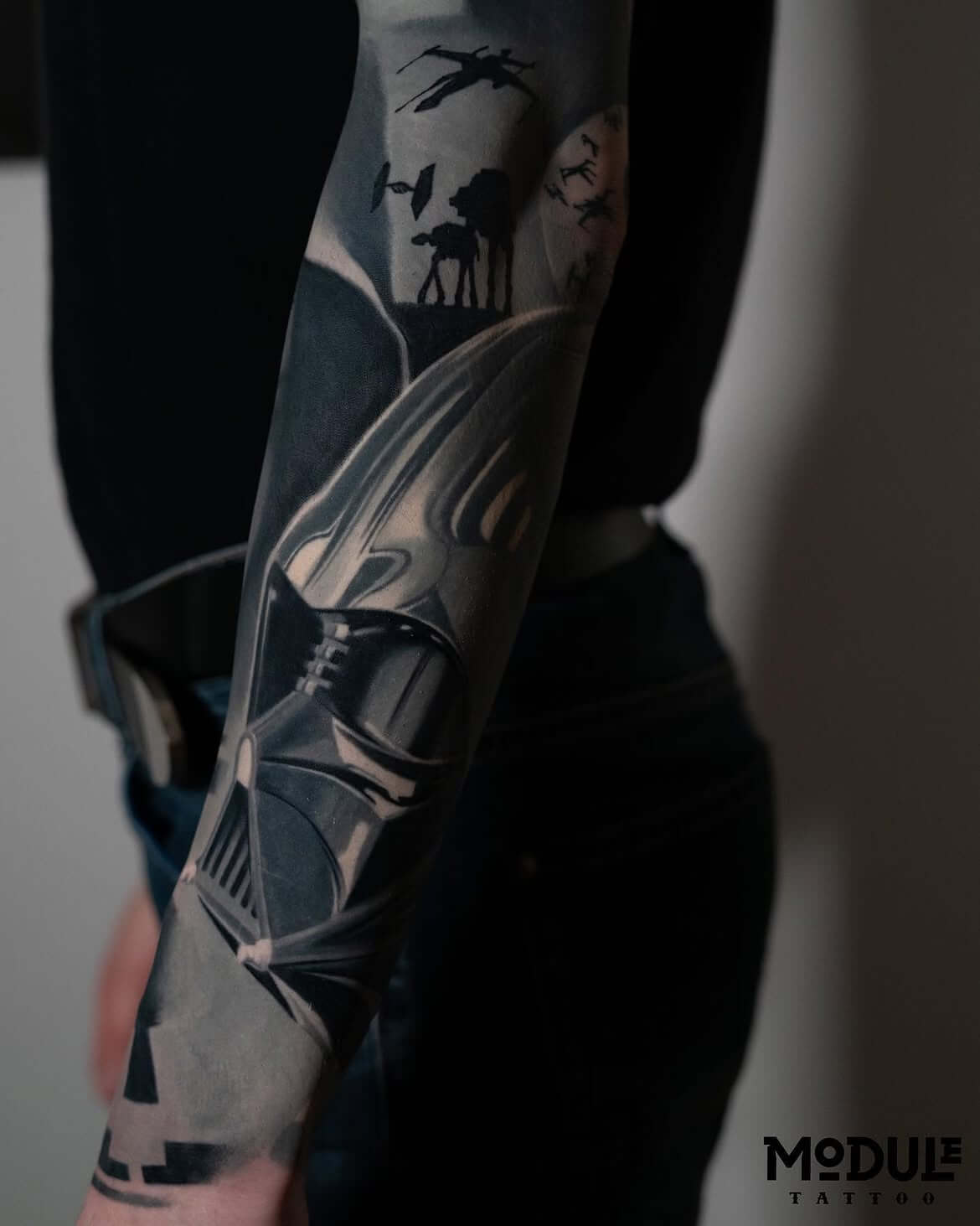
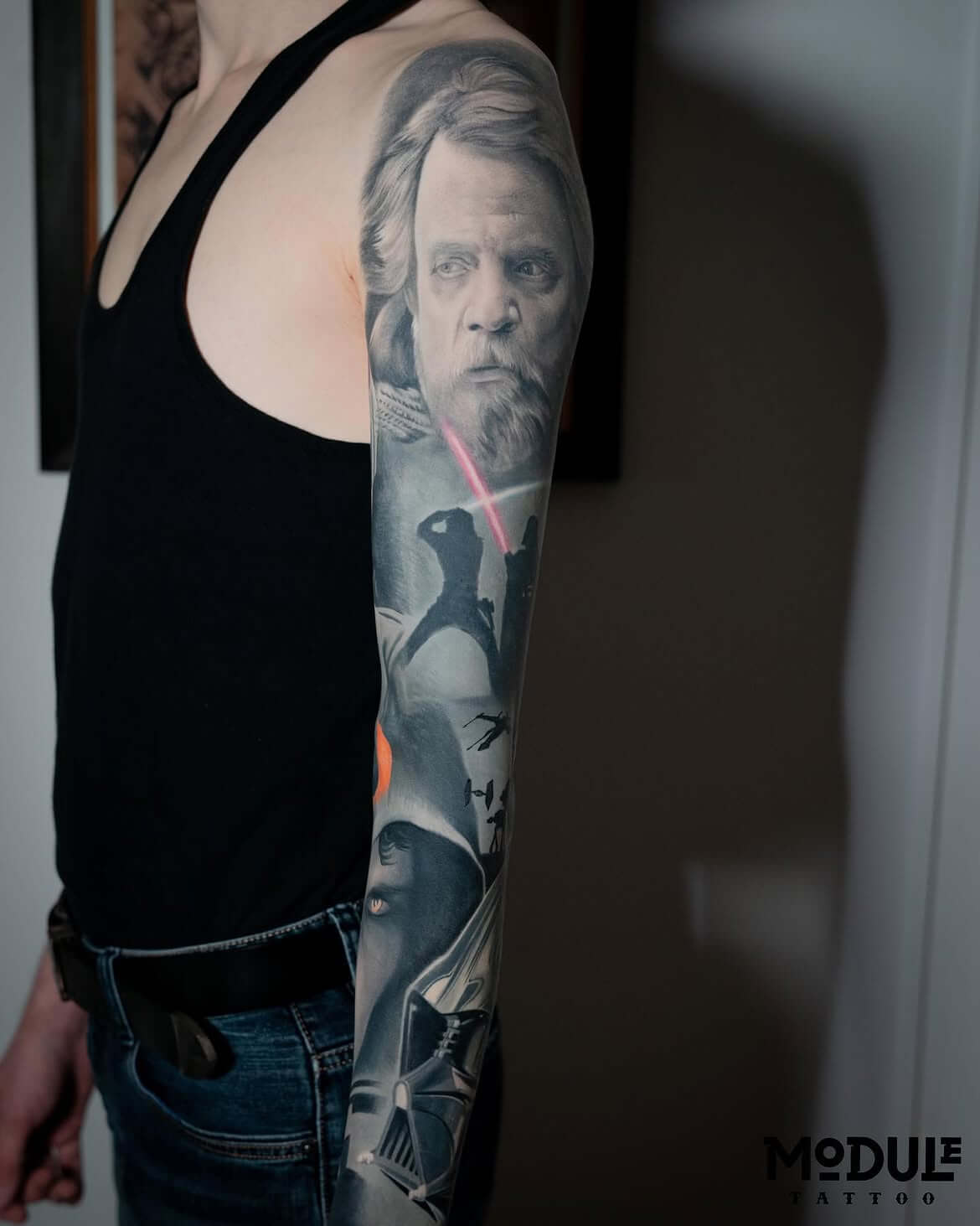
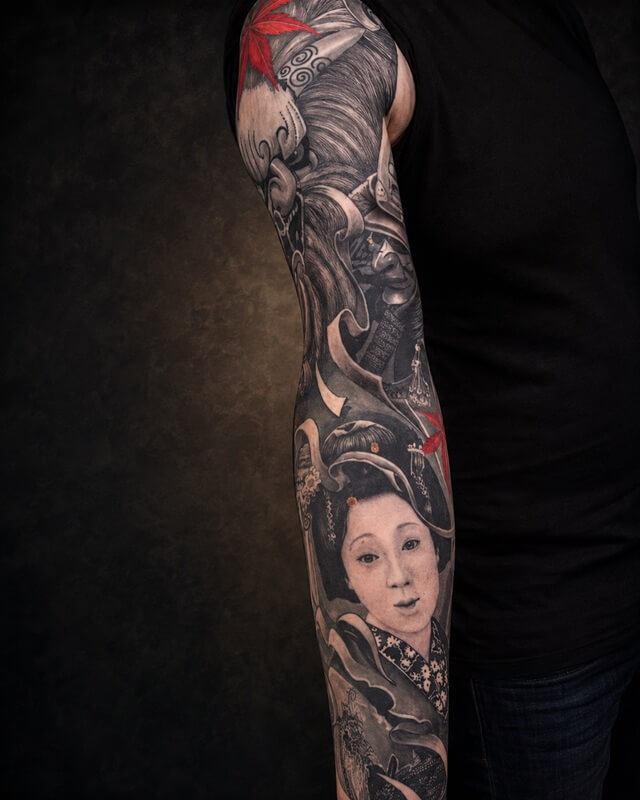
My Japanese-inspired work includes different approaches, from classical Irezumi influences to Japanese Neo-Traditional tattoos with bolder outlines and modern color choices.
Subjects can include dragons, koi, Hannya masks, kitsune, Oni, tengu, and other mythological imagery.
The great advantage of Japanese composition is that the background can become part of the entire design. Waves, clouds, wind, and other elements help connect the main subjects from one part of the arm to another.
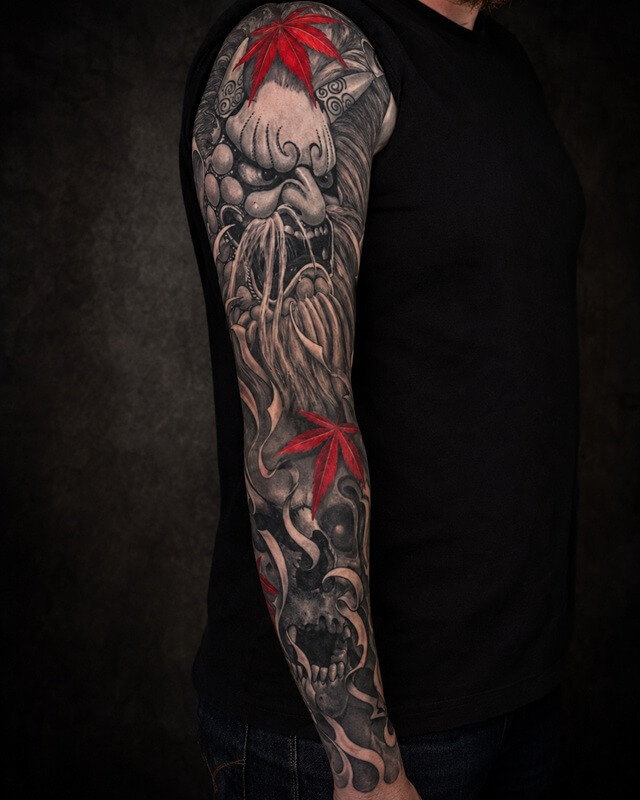
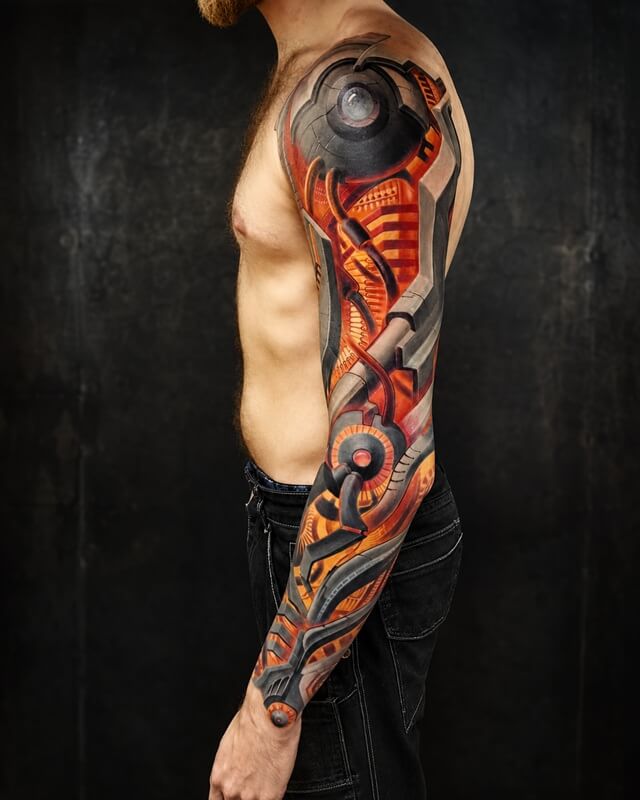
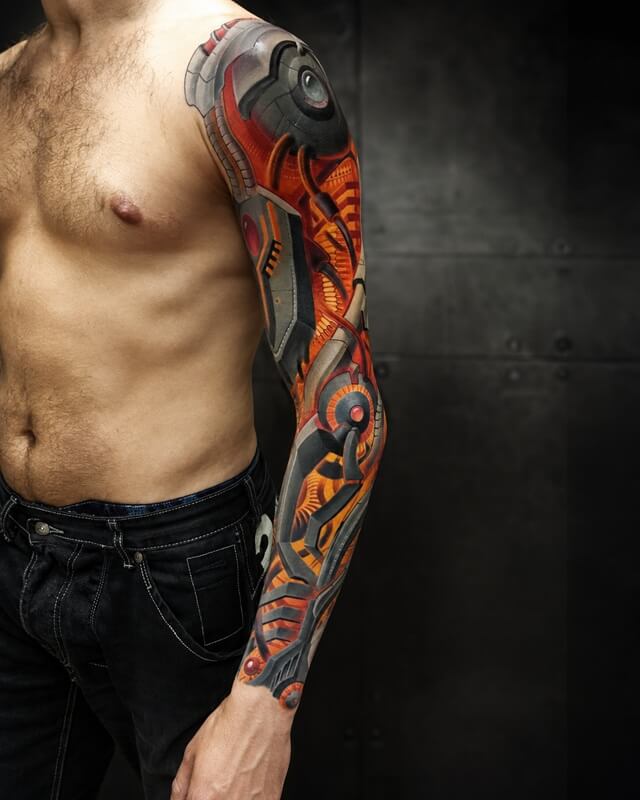
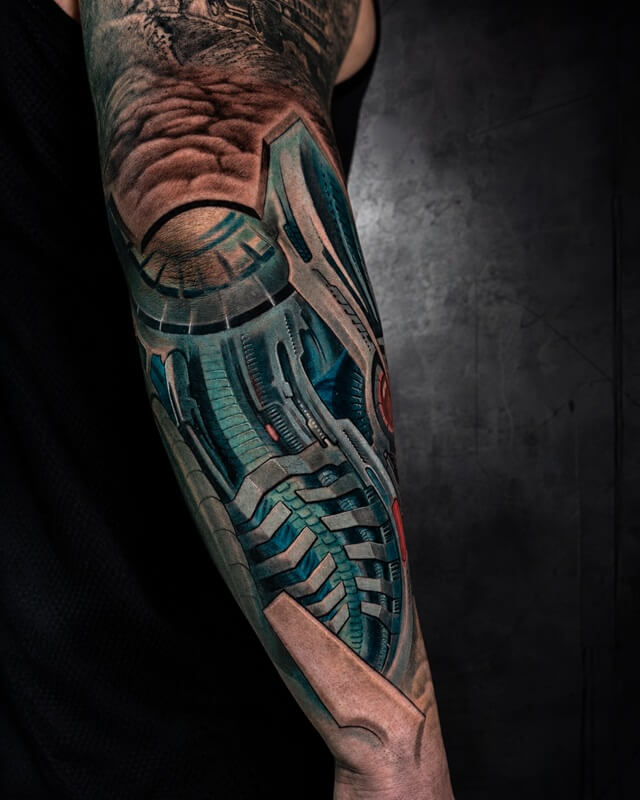
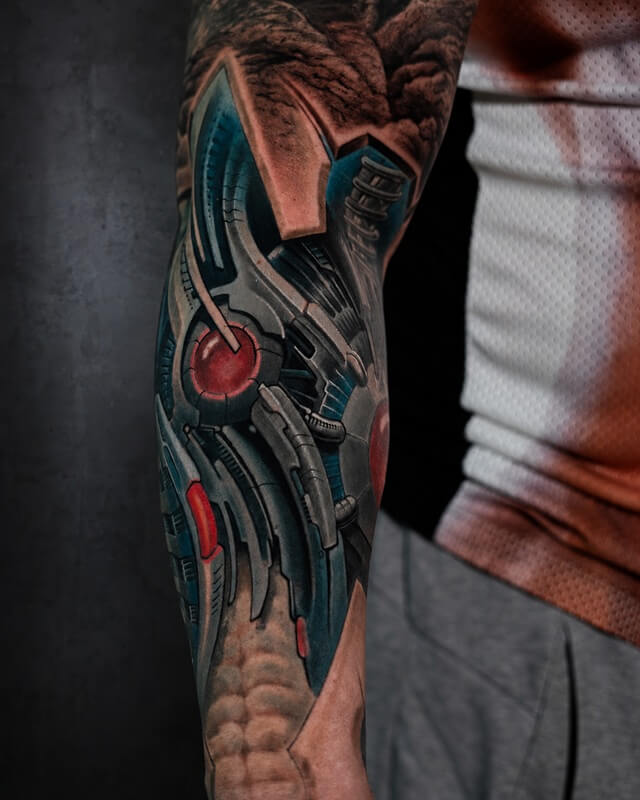
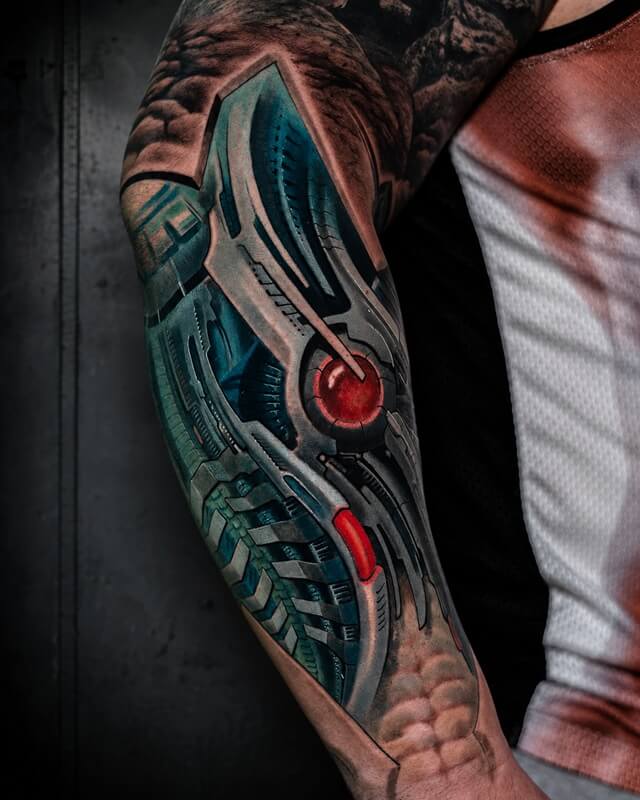
Biomechanical sleeves are one of my favorite design challenges.
I often work freehand, drawing directly on the skin to make the mechanical and organic structures fit the real anatomy: muscles, tendons, joints, and the way the elbow bends.
Rather than placing a picture of machinery onto the arm, I want the forms to look as though they belong there.
This approach gives me room to explore futuristic robotics, mechanical depth, and more abstract bioorganic structures.
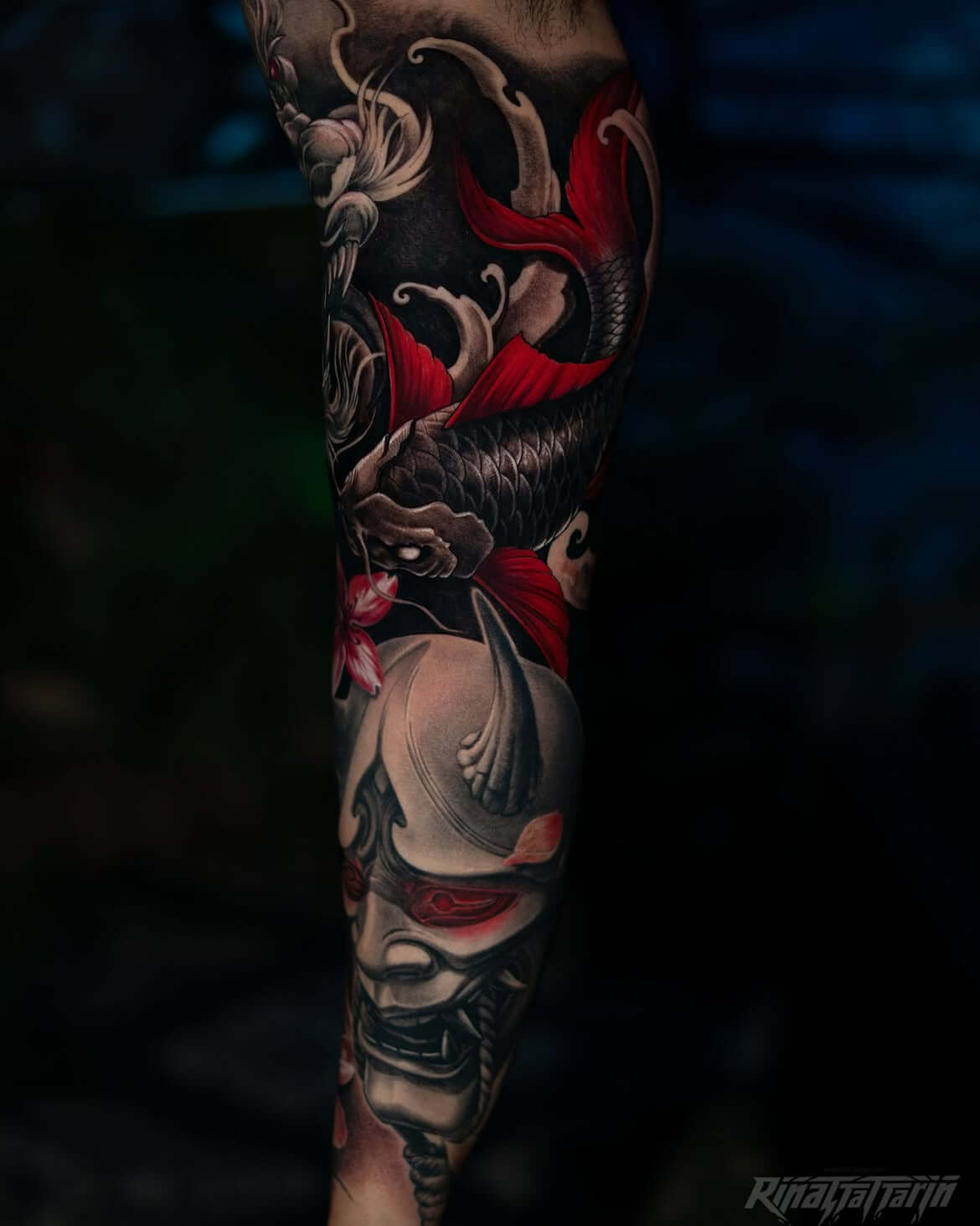
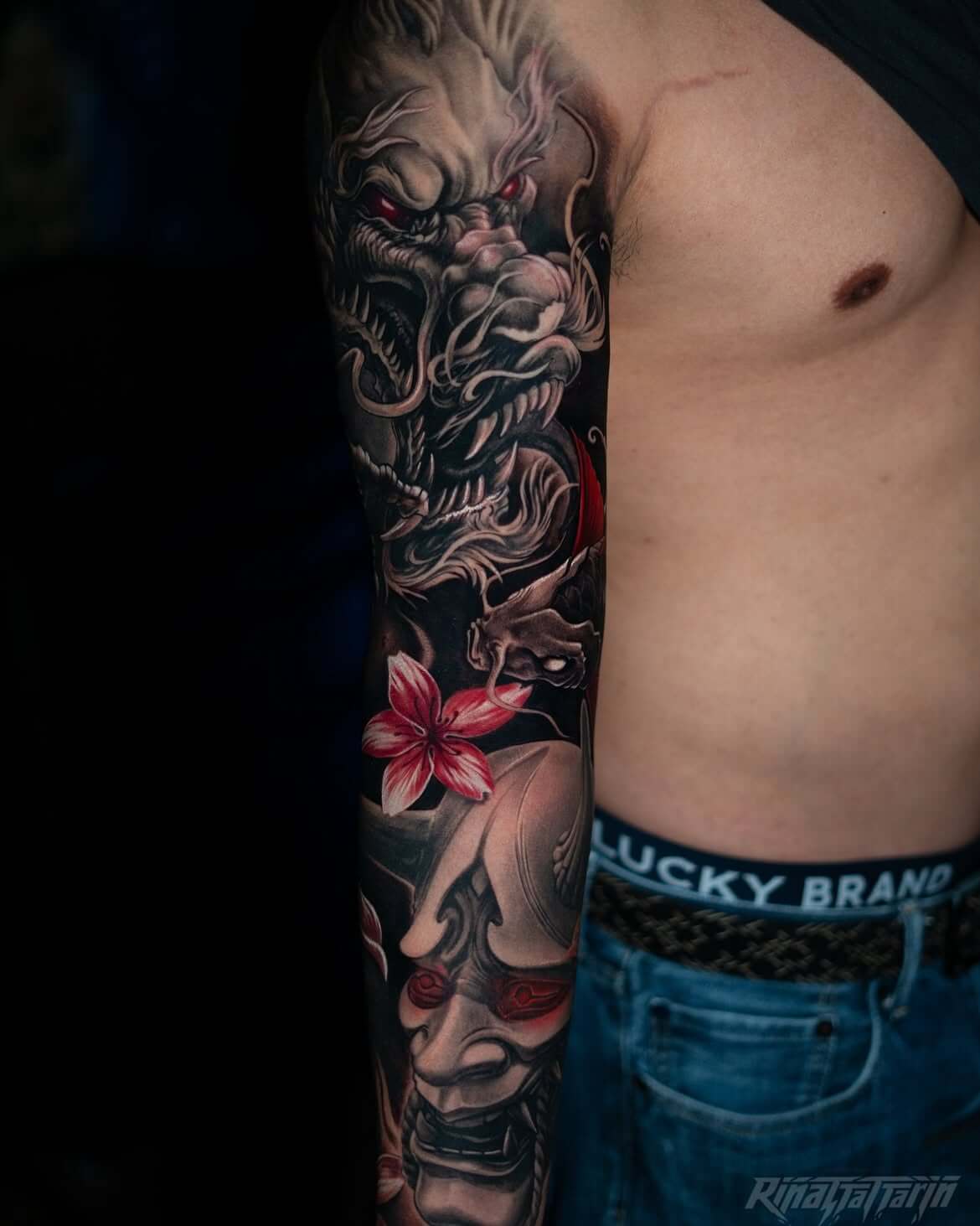
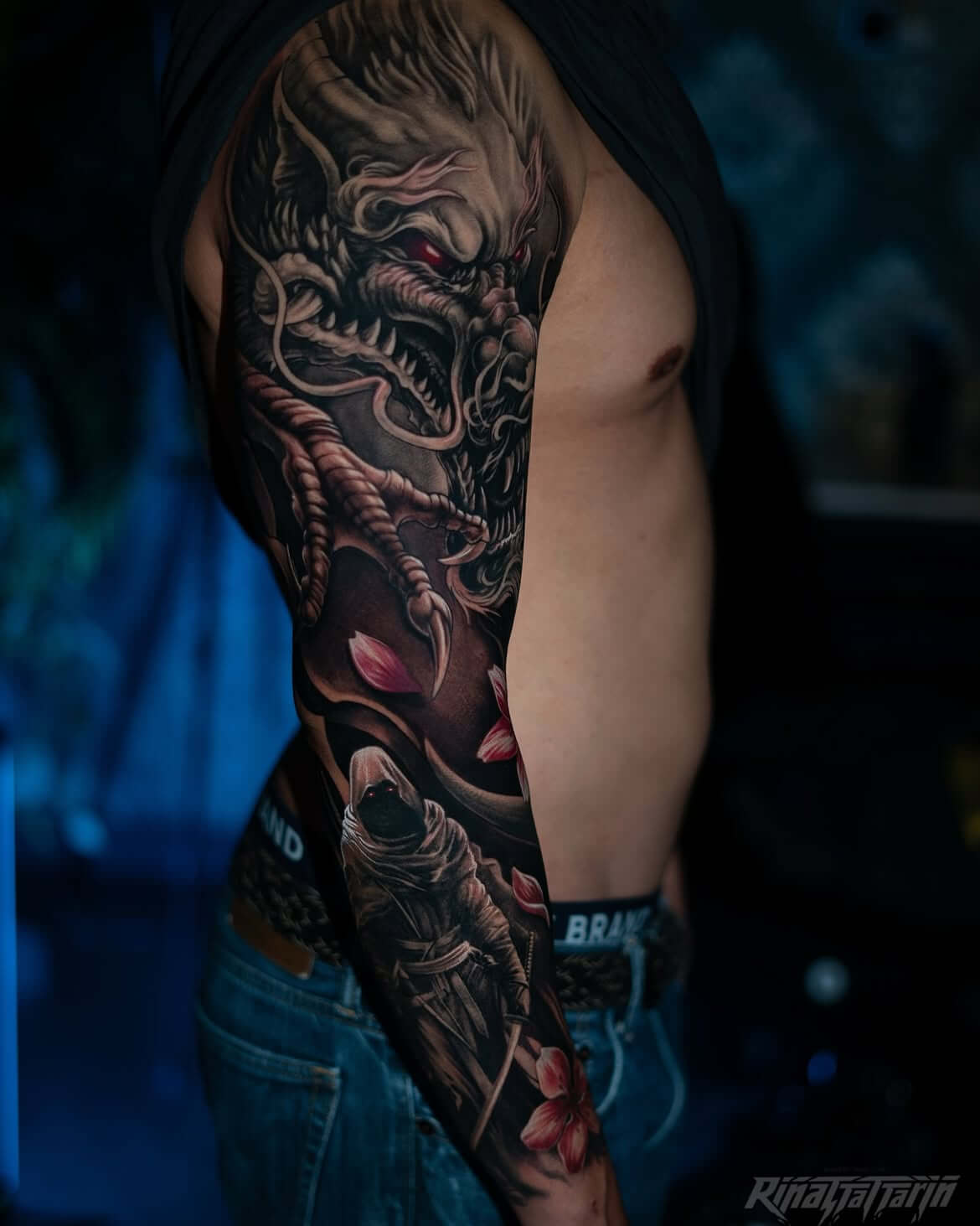
Before the first session, I want to understand the whole project: your main subjects, preferred style, placement, and whether the sleeve may eventually connect to the chest, shoulder blade, or back.
Send me references, subjects you like, and examples of the overall direction you’re considering. You don’t need a finished sleeve design.
We’ll discuss the size of the main subjects, how the artwork wraps around the arm, and how the transitions connect different areas into one composition.
I work on large tattoos in full-day sessions. A complete sleeve typically takes several visits, and we’ll discuss a realistic plan for your particular arm and design.
Consultations are free, online or at my studio in Los Angeles. I usually respond within 1–3 business days. A deposit is required to reserve your appointment, and I generally prepare the design 1–2 weeks before the session.
For a person of average build, I often use five to six full-day sessions as a starting estimate. The final number depends on arm size, style, complexity, and whether the composition extends beyond the arm.
I book large-scale work in full-day appointments rather than short sessions. The exact amount of active tattooing depends on the project and how the day progresses.
That’s what I recommend if a full sleeve is a possibility. Planning the overall composition early gives us more freedom to place the main subjects and build transitions later.
Sometimes. I’ll need clear photos of your existing tattoos to evaluate their placement, scale, style, and the remaining available space. In some cases, a cover-up or redesign may be worth discussing.
Yes. A sleeve can include multiple subjects, but I prefer to connect them through a consistent visual approach, background, or theme rather than leave them feeling like separate pictures.
Yes. I work in both, including realism, Japanese, biomechanical, and other large-scale compositions. The best direction depends on your idea and the visual result you’re after.
Pricing depends on the design, size, complexity, and number of sessions. We’ll discuss the scope of your project during a free consultation.
Absolutely. Consultations are free online or in person at my Los Angeles studio. Send your idea and reference images so we can begin discussing the project.
You can also explore other directions in my portfolio, from Neo-Traditional compositions to realism, cover-ups, and large tattoos that extend beyond the arm.
Whether you’re interested in a black and grey realism sleeve, Japanese composition, full-color project, or biomechanical design, we can start by discussing the main idea and the complete arm.
Send me references and photos of the area you’d like to tattoo. I’ll help you understand the composition, the likely number of sessions, and how we can build the sleeve as one connected project.
Consultations are free, online or in person at Monna Lissa Tattoo Studio in Los Angeles. I usually respond within 1–3 business days.